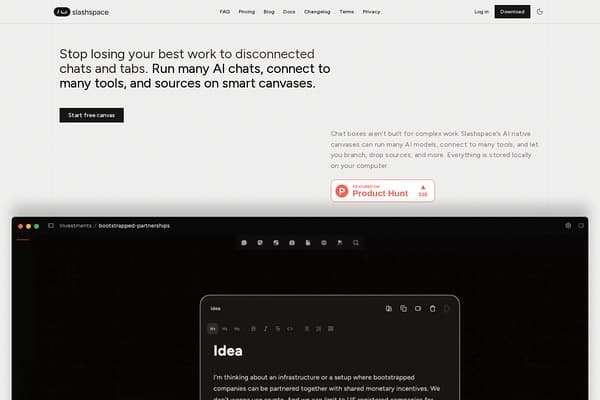
Slashspace
Revolutionize your AI chat experience with Slashspace's infinite canvas!
AI Productivity·freemium
Academic research demands rigorous literature review, efficient data management, and precise citation analysis. Yet, many scholars struggle with information overload, fragmented workflows, and the challenge of keeping up with new research. AI tools are transforming these pain points by automating repetitive tasks and providing deeper insights, allowing academics to focus on meaningful discovery.
Streamline your research, improve literature review, and manage academic files more efficiently—explore our full directory of AI research tools now.
The pace and complexity of academic research have accelerated dramatically. Scholars are expected to survey vast troves of literature, synthesize findings, manage sprawling datasets, and ensure every citation is accurate—all within increasingly tight timelines. Traditional methods—manual database searches, hand-coded spreadsheets, and basic reference managers—often fall short when faced with today’s information glut. The typical academic might spend hours sifting through irrelevant papers, struggling to organize PDFs, or searching for the latest work in their field, only to miss key developments or duplicate effort.
AI research tools address these workflow bottlenecks by automating core tasks and surfacing critical insights. For example, machine learning-powered literature review assistants can scan thousands of papers for relevant findings in minutes, while citation analysis tools map out a paper’s influence in the literature. AI-driven file management systems can tag, organize, and retrieve research documents with surgical precision, eliminating wasted time searching for files or re-downloading papers. Moreover, the ability to process large-scale datasets and natural language content is invaluable for researchers tackling interdisciplinary or data-heavy projects. In sum, AI tools enable academics to focus more on hypothesis-driven discovery and less on administrative or repetitive work—helping them stay competitive in a fast-moving scholarly environment.
When selecting AI research tools, academics should consider several critical factors tailored to the scholarly workflow. First, accuracy and transparency are paramount. Tools must deliver reliable results, especially when supporting claims or automating literature reviews. Academics need to understand how an AI arrives at its recommendations to ensure research integrity.
Second, integration with existing systems is crucial. Many researchers already use citation managers, institutional repositories, or collaborative platforms. AI tools that offer seamless import/export, API integrations, or file syncing with these environments will fit more smoothly into daily routines. Third, privacy and data security cannot be overlooked, especially for researchers handling sensitive data or unpublished manuscripts. Tools should offer robust encryption and clear data handling policies.
Usability also matters. A steep learning curve can deter adoption, especially in multidisciplinary teams or among less tech-savvy scholars. Look for intuitive interfaces, good documentation, and responsive support. Lastly, pricing models should align with academic budgets. Freemium or open-source tools can reduce costs, while premium features should deliver clear value to justify subscription fees. By weighing these criteria, academics ensure their AI investments support—not hinder—their research ambitions.
Elicit is an AI-powered research assistant designed for academic literature review. Its core strength lies in rapidly surfacing relevant papers, summarizing findings, and extracting key points from large volumes of academic text. For scholars facing information overload, Elicit can automate the initial stages of a systematic review, identifying sources that meet specific criteria and even answering research questions with synthesized evidence from the literature.
Elicit operates on a freemium pricing model, allowing users to get started at no cost and scale up with advanced features as needed. This makes it accessible for individuals, labs, or departments with limited budgets. However, while Elicit excels at processing published papers, it relies on available open-access databases—so its reach may be limited for disciplines with paywalled or less-indexed literature. Still, Elicit’s time-saving capabilities are well-suited for academics conducting topic scoping, meta-analyses, or ongoing literature monitoring.
Managing the sheer volume of research files—papers, datasets, notes, and drafts—is a persistent challenge for academics. The Drive AI offers a robust, AI-powered file management system tailored for organizing research assets. It can automatically tag and categorize documents, extract metadata (such as authors and publication dates), and enable fast, semantic search across all stored files. For academics juggling multiple projects, this means less time spent on manual organization and more time focused on meaningful analysis.
The Drive AI is especially valuable for collaborative teams, as it allows sharing, commenting, and version control on research files. Its AI-driven approach adapts to evolving research interests, surfacing relevant documents as projects progress. While not a literature discovery tool per se, The Drive AI’s organizational power supports the entire research lifecycle. One limitation is that it is a paid platform, which may require justification for grant or institutional funding. Nonetheless, the time saved in document retrieval and organization can quickly offset the cost for active researchers.
Scite brings AI citation analysis to academic research, enabling scholars to assess the credibility and influence of scientific papers. Unlike traditional citation counts, Scite distinguishes between supporting, mentioning, and contrasting citations—helping researchers gauge how a paper has been received and contextualized in the literature. This is invaluable for literature reviews, grant writing, and identifying landmark studies in a field.
Scite operates on a paid subscription model, reflecting its advanced analytics and continuously updated citation database. Academics can use Scite to visualize a paper’s impact network, avoid citing retracted or disputed work, and prioritize the most influential sources. Its primary limitation is coverage: while extensive, Scite’s database may omit very recent or niche publications, especially in rapidly evolving fields. Nevertheless, for building robust bibliographies and understanding the academic conversation, Scite is a top-tier tool.
Wiki Builder empowers academics to construct custom knowledge bases using large language models (LLMs). This tool is especially useful for interdisciplinary teams or labs managing complex, evolving bodies of knowledge. With Wiki Builder, researchers can create structured repositories of research findings, datasets, definitions, and protocols—making it easier to onboard new collaborators and maintain institutional memory.
Wiki Builder offers a freemium pricing model, making it accessible for individual academics and research groups alike. Its AI-driven organization and search capabilities help users quickly locate relevant information, even across sprawling projects. One limitation is that initial setup and content seeding can be time-intensive; the tool’s value grows as more knowledge is entered and curated. For academics committed to building living, collaborative research resources, Wiki Builder is a strong choice.
EleutherAI GPT-NeoX is an open-source AI model for diverse language processing tasks, including text summarization, question answering, and data extraction. Academics can leverage GPT-NeoX for automating literature reviews, generating research summaries, or even drafting sections of manuscripts. Its open-source nature means there are no direct usage fees, making it particularly attractive for researchers with technical expertise or those operating under budget constraints.
The primary limitation of EleutherAI GPT-NeoX is that it requires some technical know-how to deploy and fine-tune. Researchers without programming experience may need IT support or collaboration with computational colleagues. However, for those willing to invest in setup, GPT-NeoX offers unmatched flexibility and the ability to tailor language models to specific research domains or tasks.
An academic’s workflow often begins with scoping the literature—identifying relevant papers, extracting key findings, and mapping the landscape of existing research. Elicit accelerates this process by surfacing and summarizing pertinent studies. Once the literature is gathered, Scite assists in evaluating each paper’s credibility and contextual relevance, helping scholars prioritize which findings to integrate.
As the volume of research assets grows, The Drive AI becomes essential for organizing, tagging, and retrieving documents—ensuring that no valuable resource is lost in digital clutter. For teams developing internal knowledge repositories or onboarding new lab members, Wiki Builder provides a structured environment for collaborative knowledge management, allowing collective wisdom to grow and evolve over time.
For academics with technical skills, EleutherAI GPT-NeoX adds another layer, automating custom tasks such as summarization or data extraction. By combining these tools, researchers can streamline the entire research process: from discovery and validation through organization, collaboration, and knowledge sharing.
| Tool | Best For | Pricing |
|---|---|---|
| Elicit | Literature review automation | Freemium |
| The Drive AI | Organizing and retrieving research files | Paid |
| Scite | Citation analysis and impact assessment | Paid |
| Wiki Builder | Building custom research knowledge bases | Freemium |
| EleutherAI GPT-NeoX | Custom language processing tasks | Free |
To begin integrating AI into your research workflow, start by identifying your most pressing pain point—be it literature overload, file chaos, or citation management. Trial Elicit for rapid literature discovery and synthesis. Simultaneously, organize your digital research library with The Drive AI, tagging and sorting your papers and data. Use Scite to evaluate the credibility of sources as you read. For collaborative groups or labs, set up Wiki Builder to build a living knowledge base that grows with your research. If your project calls for automation or custom text analysis, explore EleutherAI GPT-NeoX and consider collaborating with technical team members. By taking these first steps, you’ll lay the groundwork for a more efficient, insightful, and impactful academic workflow.
Elicit streamlines academic literature review by surfacing relevant papers, summarizing findings, and automating evidence synthesis—perfect for overwhelmed scholars.
The Drive AI organizes and tags academic research files, making it easy for scholars to find, share, and manage papers, data, and notes across projects.
Scite provides nuanced citation analysis, distinguishing between supporting, mentioning, and contrasting citations to help academics assess paper credibility.
Wiki Builder lets research teams create structured, collaborative knowledge bases with AI-driven search, ideal for managing evolving academic projects.
EleutherAI GPT-NeoX empowers academics to automate summarization, Q&A, and data extraction for custom research tasks, especially for technically proficient scholars.
Browse 31 tools in this category
Revolutionize your AI chat experience with Slashspace's infinite canvas!
Transform your academic work with AI-powered citation and research tools.
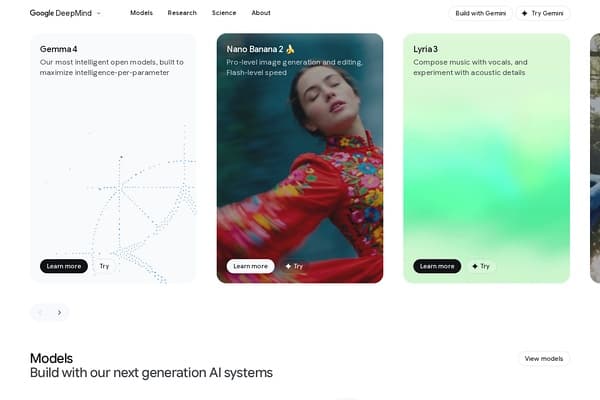
Explore groundbreaking AI solutions with DeepMind's advanced models.
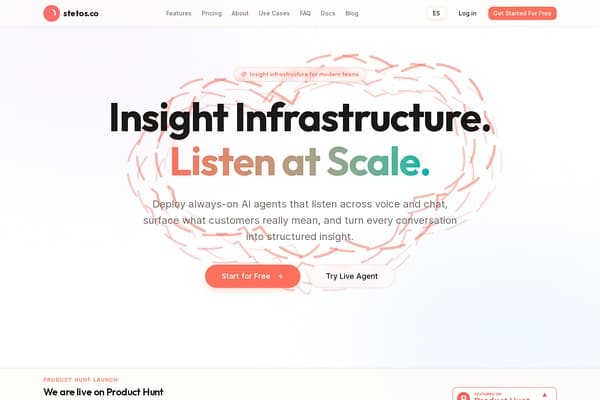
AI-driven qualitative interviews that transform customer conversations into insights.
Streamline your R&D with automated research-to-production plans.
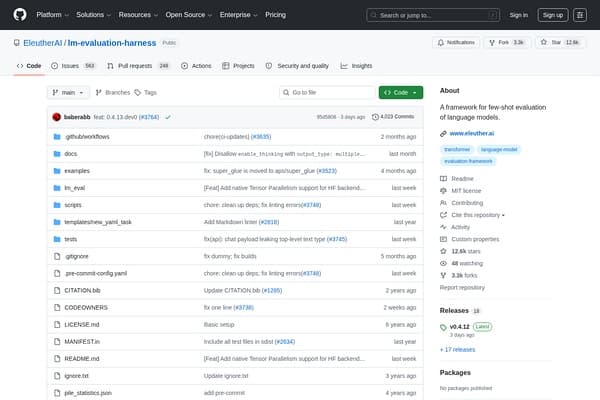
Optimize language model evaluations with ease!

Unlock high-quality B2B research with verified participants.
Revolutionize your stock analysis with AI-powered insights.
Your AI-powered research and thinking partner.
Organize Your Files with AI
The Drive AI automatically organizes, tags, and retrieves your files using artificial intelligence. Stop wasting time searching — let AI handle your file management.
Try The Drive AI freeElicit is highly regarded for automating literature reviews, as it can quickly surface, summarize, and synthesize findings from thousands of academic papers.
The Drive AI uses AI to tag, categorize, and enable fast semantic search of research files, making it easy to find and manage all your academic assets.
Scite goes beyond citation counts by analyzing the type of citation (supporting, mentioning, or contrasting) and flags retracted or disputed literature.
Wiki Builder allows research teams to create and manage internal wikis and knowledge repositories, improving collaboration and onboarding.
Yes, EleutherAI GPT-NeoX is a free, open-source language model that academics can use for custom text analysis, summarization, and data extraction tasks.
Most tools, such as Elicit and Scite, work across a broad range of disciplines, but some may have better coverage in certain fields or require technical expertise.
ai research · journalists
ai video · marketers
ai video · youtubers
ai productivity · students
ai productivity · executives
ai productivity · remote workers
Streamline your research, improve literature review, and manage academic files more efficiently—explore our full directory of AI research tools now.